There is no flat price for a CNC machined part. What one part costs depends on the material, the setup, the part’s complexity, the quantity you order, and your lead time, and any one of those can move the number a long way. Material alone can run from a few dollars to well over a thousand once you factor in the alloy and the size of the stock, and everything else is priced on top of that. This is why CNC machining is quoted per project instead of sold off a price list. This guide explains how a shop handles cost estimation, the main cost drivers, and how to lower your next quote. At Custom Concepts Machining, we quote CNC milling and turning jobs for manufacturers across Windsor-Essex County, Ontario, and Canada.
What You Are Paying For in a CNC Machining Quote
Every quote has two parts: fixed setup costs you pay once, and variable production costs that grow with each piece. The full cost calculation comes down to four items.
Setup cost is fixed: It pays for CAD programming in SolidWorks, CAM programming in Mastercam, machine preparation, and the setup labor behind them. This setup takes the same time for 1 part or 1,000, so it hits small orders hardest.
Material cost is variable: It is the raw stock price plus the material cut away and wasted. On large parts or exotic alloys, material can be the single biggest line on the quote.
Machining time is variable: It is the machine hours plus the labor of the person running the job, and it rises with the cycle time, which is simply the minutes it takes to cut one part. That machine time also carries the shop’s real operating costs behind the scenes: labor, machine depreciation, utilities, facility overhead, and routine maintenance.
Finishing cost is variable (optional): covering post-processing after the cut.
How Order Quantity and Batch Size Change Your Price
Volume is the single biggest factor in the price per part. Because setup cost is fixed, a larger order spreads that same cost across more pieces, so each part carries less of it.
Say a job carries $1,000 in setup, covering the CAD and CAM programming, machine preparation, tooling, and the setup labor behind them. That $1,000 does not change with quantity, so here is what it adds to each part:
- 1 part (prototype): the full $1,000 lands on that one piece.
- 10 parts: $100 per part.
- 100 parts: $10 per part.
- 1,000 parts (production): $1 per part.
Material and machining time for each piece are added on top of that setup share, and those stay roughly the same per part no matter how many you order. That is the whole story of why a single prototype is expensive and a production run is not: the setup does not get cheaper, it just gets divided.
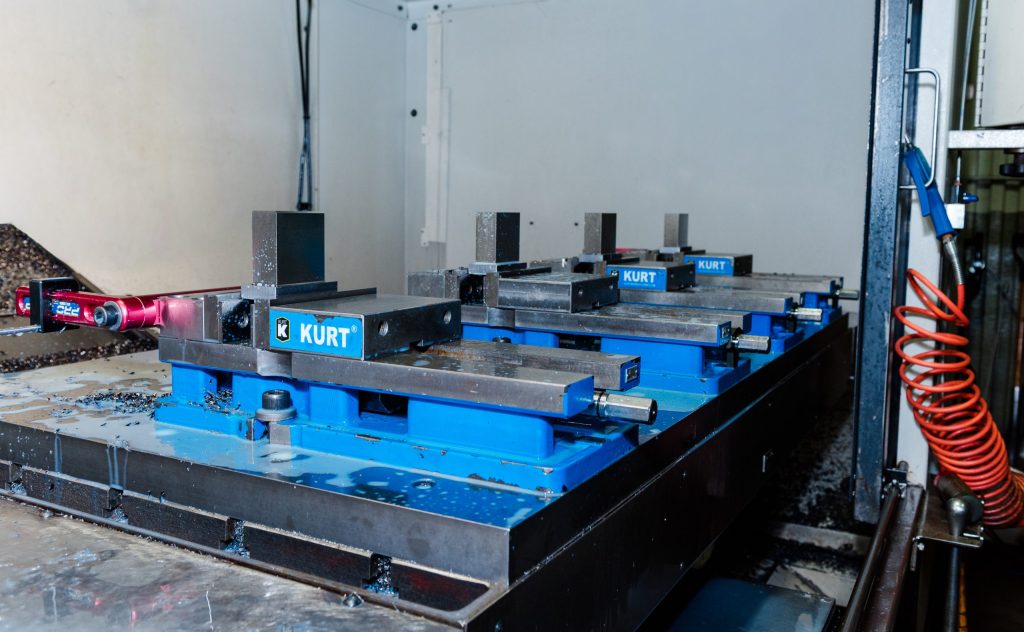
A larger Batch Size pays off. Custom Concepts Machining runs repeat batch production runs from 50 to 500+ units, so the setup cost fades and your cost estimation per part keeps dropping.
Prototypes vs. Production Runs
A prototype and a production run are priced very differently. The first prototype carries the whole setup cost alone, so its price per piece is high. Prototyping the part with CAD design first still saves money, because you catch problems before a full batch. As the order grows into production, your cost estimation per part drops fast.
The Key Cost Drivers of Your Quote
Four factors move your quote the most, and each feeds your cost estimation.
1. Material Choice and Machinability
Your material sets two costs: the raw stock price, and its machinability, which is how fast a tool can cut it. The faster it cuts, the less you pay.
- Plastics like ABS, nylon, and POM (acetal): cheap stock, fast to cut, and easy on tools.
- Aluminum 6061: the value standard, and it machines very fast.
- Stainless steel 304 and 316: harder to cut, slower, and tougher on tools.
- Titanium and other exotic alloys: costly stock, very slow to cut, and hard on tools.
We machine steel, aluminum, stainless, alloy steels, titanium, and most plastics, and match the metal to your part and budget.
2. Part Complexity and Geometry
The more complex the part, the more machine time, tooling, and hands-on labor it needs. Complex geometries raise the price because they need extra tool paths, more setups, and special tooling. A few features drive cost fastest.
Multiple setups add cost, because the machine has to stop so someone can flip the part. Deep pockets need long-reach tooling and thin cutting tools that must cut slowly to avoid snapping. Undercuts hide behind the part face, so they need shaped cutting tools or 5-axis machines to reach. Thin walls under 0.8mm in metal or 1.5mm in plastic need slow passes. Each extra setup and tooling change adds cycle time, so complex geometries are the main reason a part costs more.
3. Tolerances and Surface Finishing
Tolerance is the allowed error in a size, and a tighter tolerance always costs more. Standard tolerances of about ±0.125mm (±0.005 in) suit most parts and keep the price low. Tight tolerances of ±0.025mm (±0.001 in) or better call for slower cutting and extra in-process inspection, which is exactly what keeps scrap down to none.
Surface finish works the same way. An as-machined finish is the cheapest and leaves light tool marks. Extra finishing operations like bead blasting, polishing, anodizing, powder coating, and electroplating each add a fee and setup time.
Quality Control and Inspection
Quality Control adds cost, but it protects you from paying for scrap. On a new job, the shop runs a first article inspection, which measures the first part against your drawing before the full run. Ongoing Quality Control then checks parts against tolerance, so this inspection is part of your cost estimation. Automation makes it cheaper, because probes measure parts inside the machine and catch drift early.
Cost Reduction Tips: Design for Manufacturability
You can lower your own quote with a few design changes. These Design for Manufacturability rules cut machine time and setup work, and they lower your cost estimation before you send your CAD file.
- Increase internal corner radiuses. Make each inside corner at least one-third of the pocket depth so a standard round tool can reach it.
- Limit pocket depth. Keep pockets no deeper than four times their width, since deep pockets need special tooling.
- Minimize setups. Design the part so it can be cut from one direction or a standard 3-axis setup.
- Use standard threads. Choose common tap sizes, and avoid threading to the bottom of a blind hole.
- Relax non-critical tolerances. Save tight tolerances for mating faces and bearing seats, and leave the rest standard for more cost reduction.
These changes give the biggest cost reduction on complex parts, where extra setups pile up.
How a Machine Shop Builds Your Cost Estimation
Cost estimation blends the formula with real experience at a busy job shop. For hard parts, the estimator adds a complexity multiplier, because tight tolerances and tricky shapes run slower than the numbers suggest. A complexity multiplier of 1.5 to 2 is common for hard metals and multi-setup parts. The shop weighs labor, machine time, and cycle time against the drawing, then adds a markup for risk and profit. A fair cost estimation balances that markup against a competitive price, and the cost estimation gets sharper each time the shop runs your part.
Why a Local Machine Shop Lowers Your Total Cost
Lead time is the fourth big factor, and a local shop saves you money the unit price never shows. Freight, long waits, and rework all add to the real cost. An overseas supplier may quote a low unit price, then make you wait weeks and idle your line. Custom Concepts Machining ships custom replacement parts from Leamington, Ontario far faster than an overseas shop, and we reverse engineer legacy parts when the drawing is missing. We also offer equipment maintenance, for the agricultural sector and other manufacturing facilities.
Get an Accurate CNC Machining Cost Estimate
A local machine shop gives you cost reduction beyond the unit price, and keeping the whole manufacturing process nearby means fewer surprises. Every part is different, so the only way to know your true CNC Machining Cost is a quote on your project. Send us your part model, material, and quantity, and we return a clear price with materials, timeline, and manufacturing terms.

Call Jeff at Custom Concepts Machining at 519-325-0804 or fill out our contact form to get a reliable quote today.