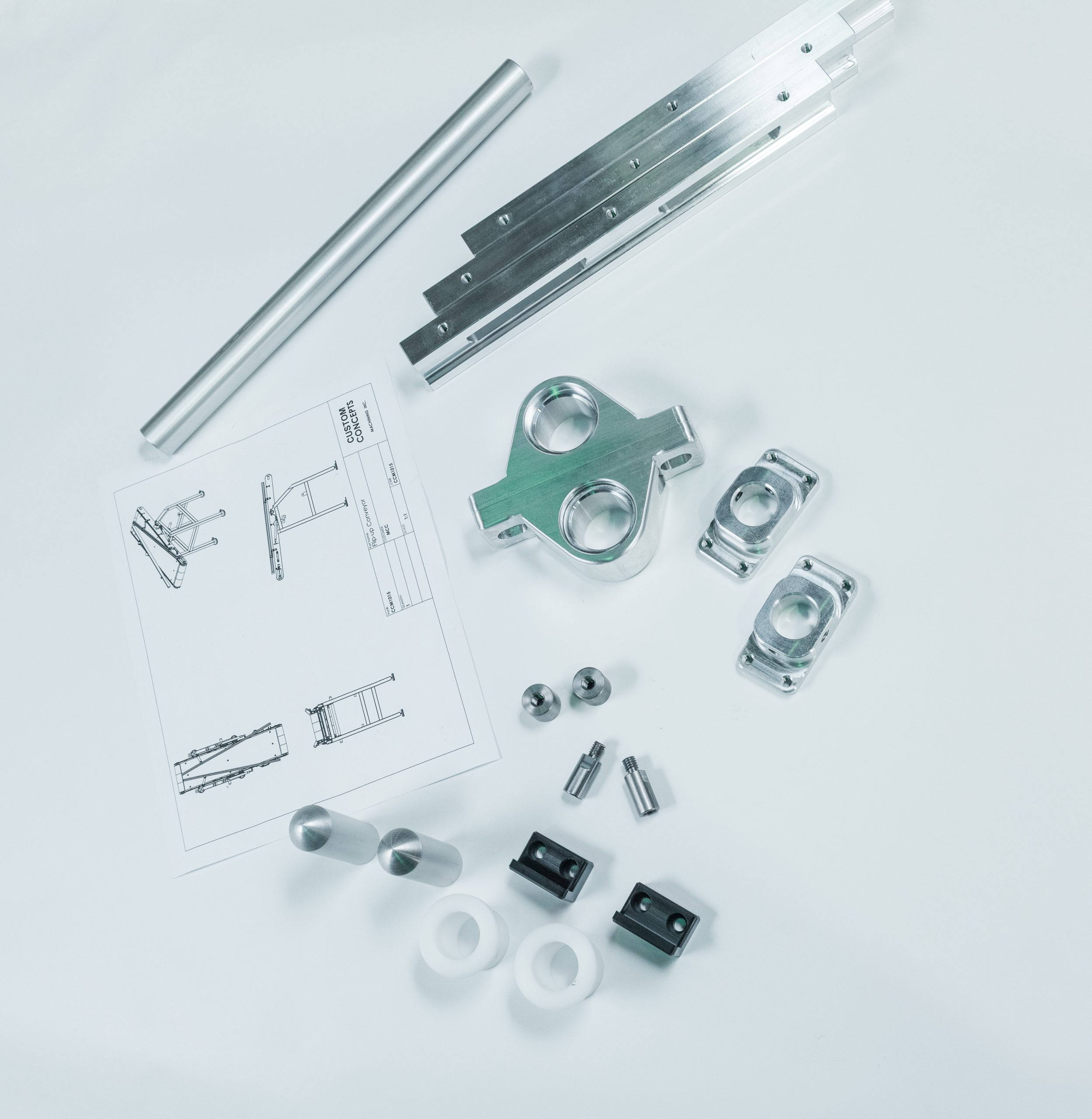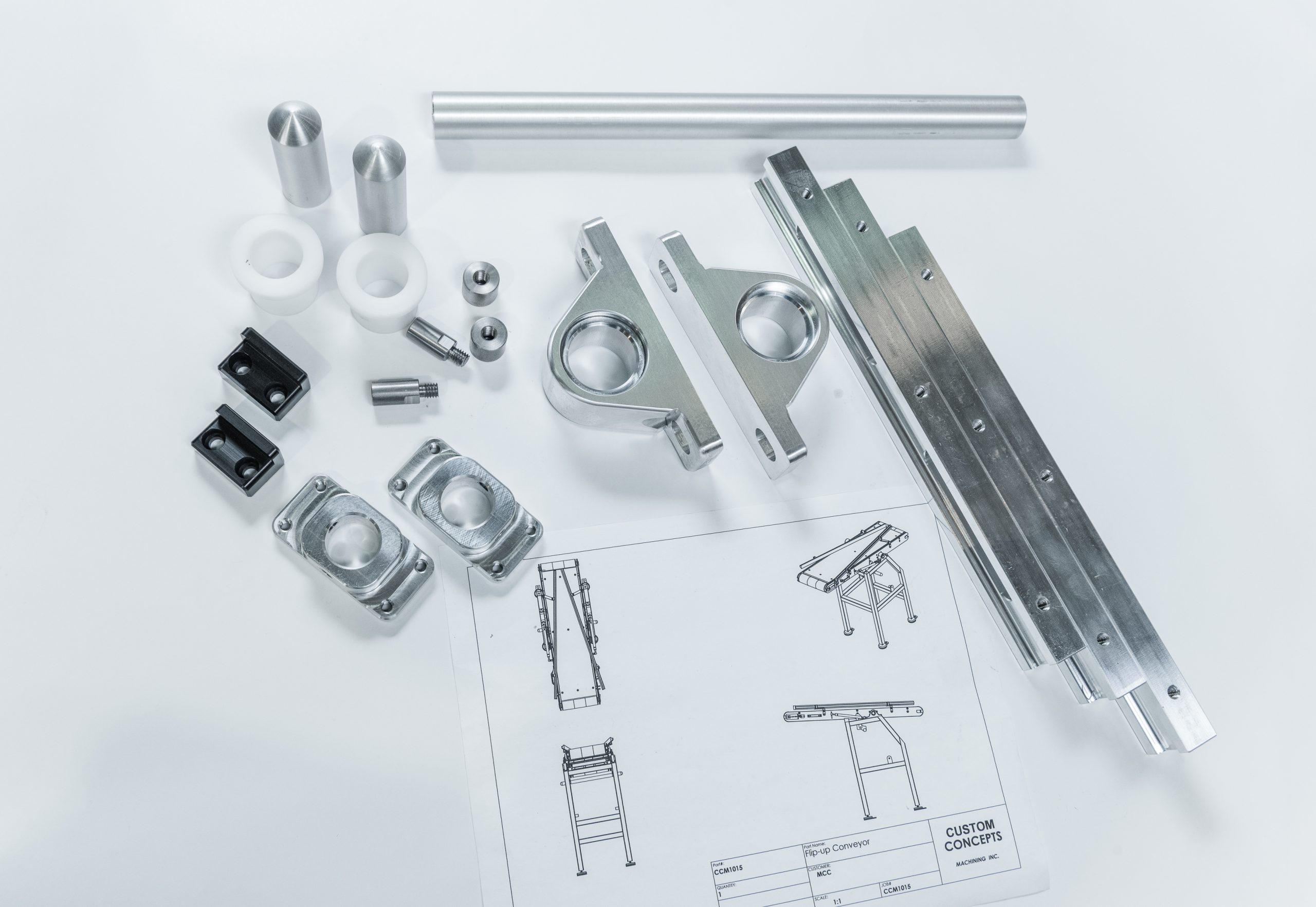
A manufacturer needed access to the back side of their production line, but the only way through was across the conveyor. The flip-up conveyor bridging that gap was old, chain-driven, and going down regularly — sometimes pulling the line out for two days at a stretch. They asked Custom Concepts to design something better.
PROBLEM
The existing unit was a two-piece system — a flat belt and an incline belt — driven by chains, gearboxes, shafts, and sprockets. Every one of those components is a wear point. When bearings fail or sprockets go, the whole conveyor has to come apart. Operators were pulling shafts and swapping sprockets for a day, sometimes two, before the line was back up. While it was down, product had to be moved by hand between machines.
Constant wear, hard to maintain
Chains, bearings, and sprockets have a service life. On a production line running daily, that means regular failures and a teardown every time something goes. The design wasn’t maintenance-friendly — getting at the worn parts meant pulling the unit apart completely.
Downtime cost
A day or two offline isn’t just a maintenance inconvenience. With the conveyor down, the line stops moving product the way it’s supposed to. Workers hand-bombing material between machines to keep things going is time, labour, and risk that adds up fast.
SOLUTION
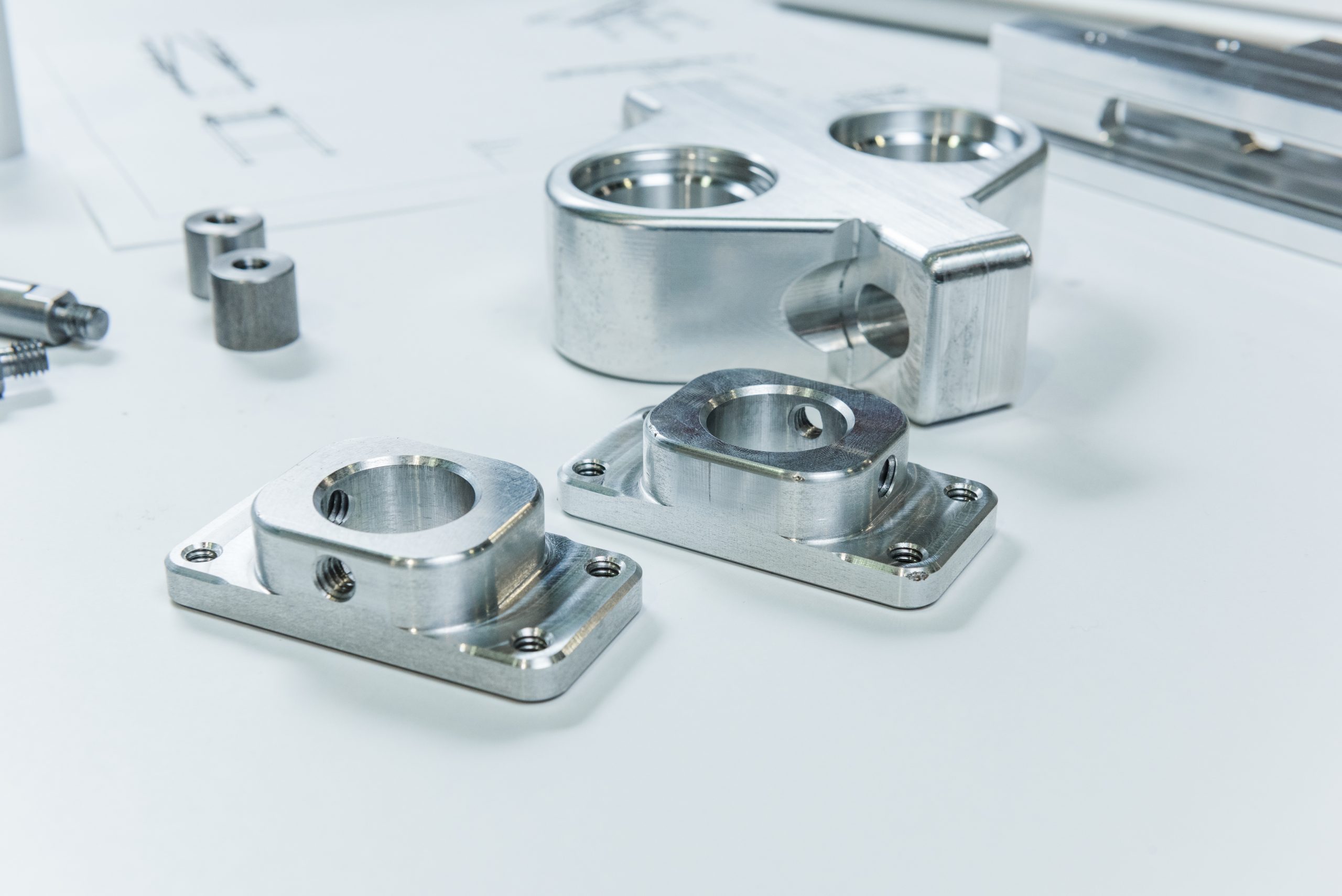
Custom Concepts measured the space in-plant, talked through the improvements the client wanted, and came back with a single-conveyor design that works like a teeter-totter — one pivot point in the middle, gas shocks on the lift side so it goes up with almost no effort. One drive motor. No chains, no gearboxes, no shafts, no sprockets. Frame fabrication and powder coating went to an outside vendor, controls to an electrical specialist. All parts came back to the Custom Concepts shop for final assembly, testing, and install. Less to wear out, faster to service if anything ever does.