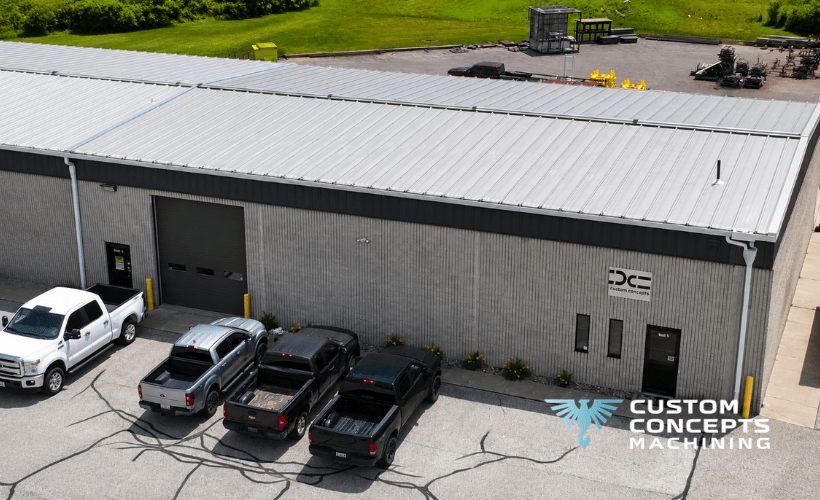
Choosing a machine shop is a decision you live with for years. The right shop ships parts on time and holds tolerance on every run. The wrong one costs you rework, rush freight, and a build that misses its date. This checklist gives buyers, procurement managers, and operations teams a clear way to compare CNC machine shops before the first purchase order goes out. Custom Concepts Machining based in Leamington, Ontario… built it around the questions our own customers ask during vendor qualification.
Start With the Quality Management System
A Quality Management System tells you whether a shop follows a documented process or depends on one skilled operator. ISO 9001 is the baseline standard for CNC machine shops. Aerospace buyers look for AS9100. Medical device companies require ISO 13485. Ask to see the certificate itself. A real certificate carries an issue date, an expiry date, and an audit record, so a registered shop can send one on request.
Certification does not guarantee good parts. A shop without a formal registration can still deliver high-quality work on prototypes and non-regulated industrial components. Judge that shop on evidence instead. Ask for references from customers with similar parts, request a sample piece, and ask how the shop records its results.
Inspection Equipment and Reports
A shop proves quality by measuring, not by claiming. Ask what inspection tools sit on the floor. Ask how the shop checks a first article before it runs the full batch. Then request sample inspection reports from a job that resembles yours. A clean report lists the measured value beside the print value on every dimension. That format shows inspection belongs to production rather than to a rushed final step.
Material Certifications and Traceability
Traceability answers one question. Can the shop tell you where your material came from? Ask for material certifications and mill certificates with the order. Regulated work requires them. General industrial work benefits too, because your own customer may ask which alloy went into the assembly.
Match Machining Capability to Your Part
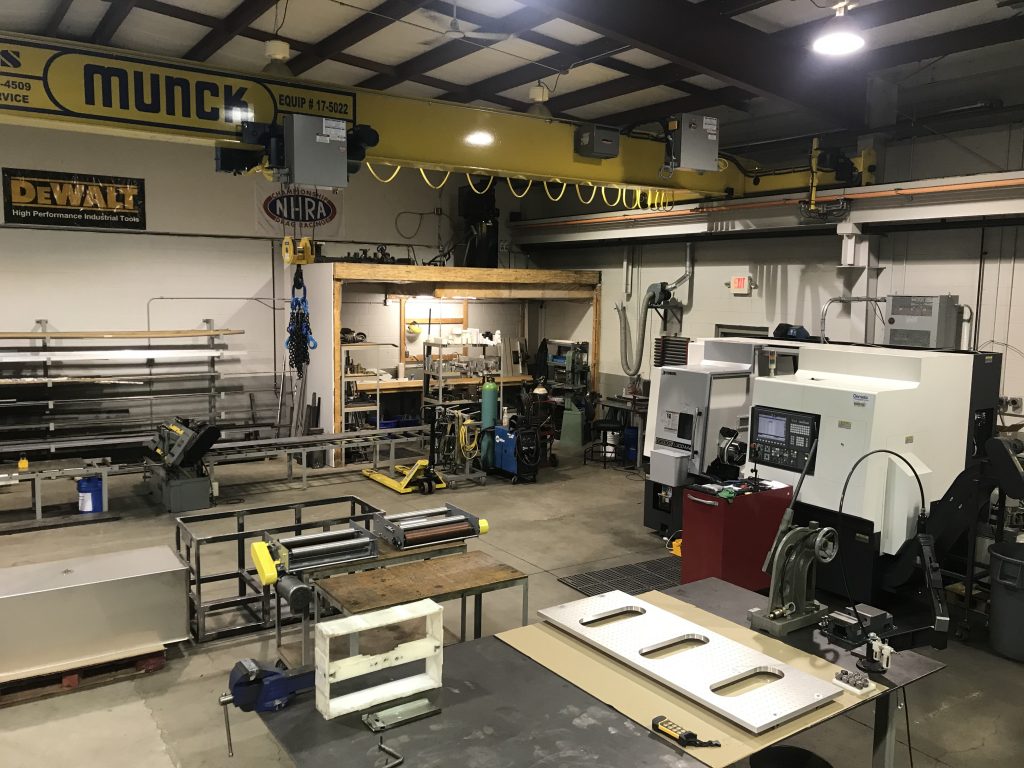
Equipment defines the machine batch production capabilities you can draw on. Before you send a drawing, confirm the CNC machines on the floor suit your part. Check three things: geometry, material, and size. A three-axis CNC mill handles flat features and simple profiles at the lowest cost. Multi-axis machinery cuts from several angles in one setup, which improves accuracy on complex parts. CNC turning covers shafts, pins, bushings, and other round components.
Ask these questions before you assume a shop fits your part:
- Part size limits. Confirm the working envelope on the mills and the swing and length capacity on the lathes.
- Materials on the floor. Steel, aluminum, stainless, alloy steels, titanium, and engineering plastics each cut differently and need different tooling experience.
- Secondary operations. Anodizing, plating, heat treating, and finishing are often subcontracted. Ask who manages that step and who owns the schedule.
- Design and programming software. In-house CAD and CAM shortens the path from your model to a running toolpath.
Custom Concepts Machining runs CNC milling and CNC turning alongside welding, light fabrication, plastic 3D printing for prototypes, and in-house CAD design. One shop covers the whole part instead of three.
Fewer Vendors, Fewer Handoffs
Many procurement teams manage a machining supplier, a welding shop, and a finishing house for a single component. Every handoff adds a quote cycle, a shipping leg, and one more place where accountability blurs. A shop that machines, fabricates, and designs under one roof gives you one purchase order and one person who owns the result.
Check Capacity, Lead Time, and Delivery History
Capacity is where good intentions meet reality. A machine shop with one machine of each type has a single point of failure, so one breakdown stops your order. Ask how many machines could run your job. Ask what the shop floor load looks like this month. Ask for a realistic lead time at your quantity.
Then ask about history instead of promises. On-time delivery rate is a number a well-run shop already tracks. A supplier who cannot describe their record is probably not measuring it. Ask how the shop tells you when a date slips. Every shop misses a date eventually. What matters is whether you hear about it in week two or the day before delivery.
Volume Flexibility
Minimum order quantity creates friction fast. You need 75 units and the shop only quotes runs of 500. Or the setup cost on a short run pushes the per-piece price out of range. Confirm the shop works comfortably in your volume band before you invest time in a quote. Batch runs of 50 to 500 units, single prototypes, and emergency runs of a few pieces each carry different economics, and not every supplier wants all three.
Judge Communication Before You Judge Price
Communication is the signal you can read before the first part ships. Quality records and delivery history tell you more, but you only see those after the order. A shop that returns quotations within a business day or two will answer the phone when a job goes wrong. A shop that takes a week to reply before the order will disappear after it.
Watch for these five signals during first contact:
- Questions about your drawing. A shop that reads your print catches problems before it cuts metal. Silence usually means nobody looked closely.
- A named point of contact. You want one person who knows your job, not a general line and a new voice every call.
- Design for manufacturability feedback. Strong suppliers flag a tolerance that adds cost without adding function, or a feature that forces an extra setup.
- A clear process for non-conforming parts. Ask what happens when a part measures out of spec. A confident answer covers containment, disposition, and corrective action.
- Proactive status updates. Ask what technology tracks your job. Shops running Enterprise Resource Planning software report order status without walking the floor.
Weigh Location and Supply Chain Risk
Distance costs freight and time, but the larger cost is lost options. When a critical part fails, a local shop lets you drop off the broken piece and watch the replacement get cut. An overseas supplier turns that same recovery into weeks. Reshoring pressure and freight volatility have pushed North American supply up the priority list for many procurement teams.
Location matters for reverse engineering too. When the original equipment manufacturer no longer supplies a legacy part, a nearby shop can measure the failed component, model it, and machine a high-quality replacement. Your only remaining sample never crosses an ocean.
Run a Small Test Order First
Vendor qualification should end with evidence, not with a checklist. Place a small order before you commit production volume. A test run shows you quote accuracy, real lead time, packaging quality, dimensional accuracy, and how the shop answers a question mid-job. Switching suppliers later costs far more, because requalification means new samples, new approvals, and an updated vendor list. The small order is cheap insurance.
Score any shop against this list before the first order:
- Documented quality system and sample inspection reports
- Equipment matched to your part size, material, and complexity
- Realistic lead time backed by delivery history
- Named contact and fast quote response
- Comfortable volume range for your typical run size
- Local access or reliable shipping to your dock
Get a Quote From a Shop That Answers the Phone
Every item on this list points the same direction. Reliability beats price over the life of a supplier relationship. Saving a few cents per unit means nothing when one bad run costs you a five-figure rework bill and a late shipment to your customer. Custom Concepts Machining operates a full-service machine shop at 4 Iroquois Road, Unit #5 in Leamington, Ontario, and serves manufacturers, OEMs, and production facilities across Windsor-Essex County, Ontario, and the United States. Send a drawing, a photo of a failed part, or a rough sketch. Jeff Preston will scope the job with real materials, real unit counts, and a real delivery date.

Custom Concepts Machining operates a full-service machine shop at 4 Iroquois Road, Unit #5 in Leamington, Ontario, and serves manufacturers, OEMs, and production facilities across Windsor-Essex County, Ontario, and the United States.
Send a drawing, a photo of a failed part, or a rough sketch to our machine shop. Jeff Preston will scope the job with real materials, real unit counts, and a real delivery date. Call (519) 325-0804 or request a quote at customconceptscanada.ca.